What Goes Into a Canyon Lot Soil Stability Report
A canyon lot soil stability report is the document that turns "the yard looks fine" into an actual answer about whether the slope behind a San Diego house is moving, and why it is treated as a prerequisite rather than an optional extra on canyon-adjacent property.
Why Canyon-Adjacent Lots Get Treated Differently
A canyon edge is not just a view — it is a slope that has its own failure modes independent of the house sitting near it: surface erosion, deep-seated slope creep, and expansive clay behavior all interact differently on a graded canyon lot than on a flat inland pad. A canyon lot soil stability report exists because a foundation contractor pricing pier work on a canyon lot without first knowing which of those failure modes is active is pricing against a guess, and the wrong guess either underbuilds the fix or spends money solving a problem the lot does not actually have.
What a Geotechnical Engineer Actually Tests
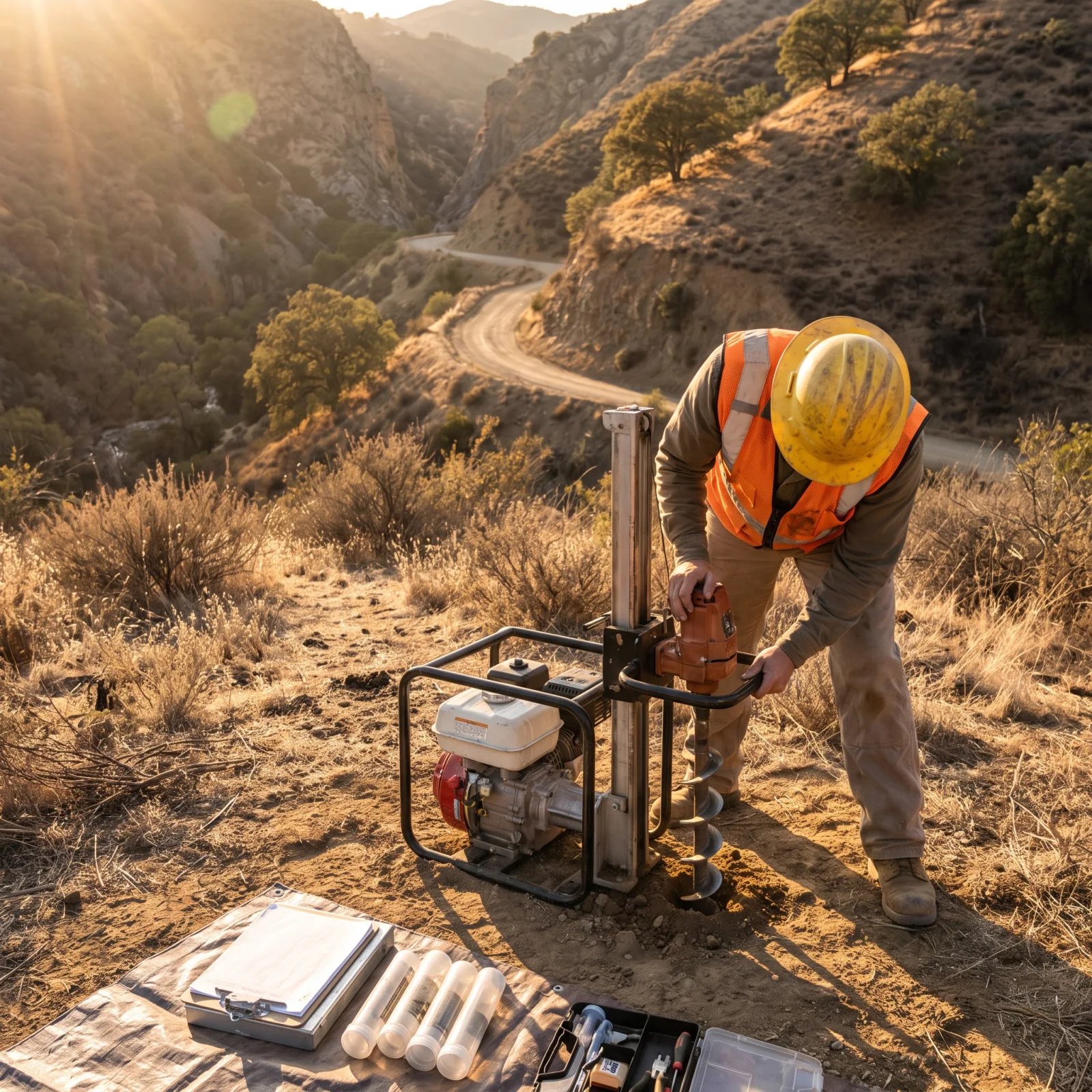
The report typically starts with soil borings at several depths to identify the soil profile — where the expansive clay layer sits, how deep it runs, and where competent bearing material starts — because that profile is what determines pier depth in any piering plan that follows. Slope inclinometers or survey monuments may get installed to measure movement over a monitoring period rather than a single snapshot, since a slope that looks stable in one visit can be actively creeping at a rate only visible across seasons. The report also documents drainage patterns on and around the lot, because uncontrolled surface water is the single most common trigger for canyon slope movement in San Diego's wet-dry climate swing.
How the Report Changes the Repair Scope
A soil stability report that finds active deep-seated slope movement points toward a different (and larger) repair scope than one that finds a stable slope with a localized drainage problem — the first may need engineered tiebacks or retaining structure in addition to foundation piers, while the second may need only regrading and a drainage fix well upstream of any foundation work. This is the report's real value: it lets a homeowner get one written scope of work from an engineer, then bid that exact scope to multiple contractors, instead of getting several different scopes back from several different sales-driven site visits and trying to compare them like they are the same job.
What to Ask For Before You Pay for One
Confirm the report will be sealed by a licensed California geotechnical engineer, not just a field technician's summary — only a sealed report carries weight with an insurer, an escrow lender, or a permitting office if the finding gets disputed later. Ask what monitoring period the report covers; a single-visit report with no monitoring data is a starting point, not a final answer, on a lot with any history of visible movement. And get the report before signing a contractor bid, not after — the report is what makes the bid comparable across contractors in the first place.
Ready for a written number on your project?