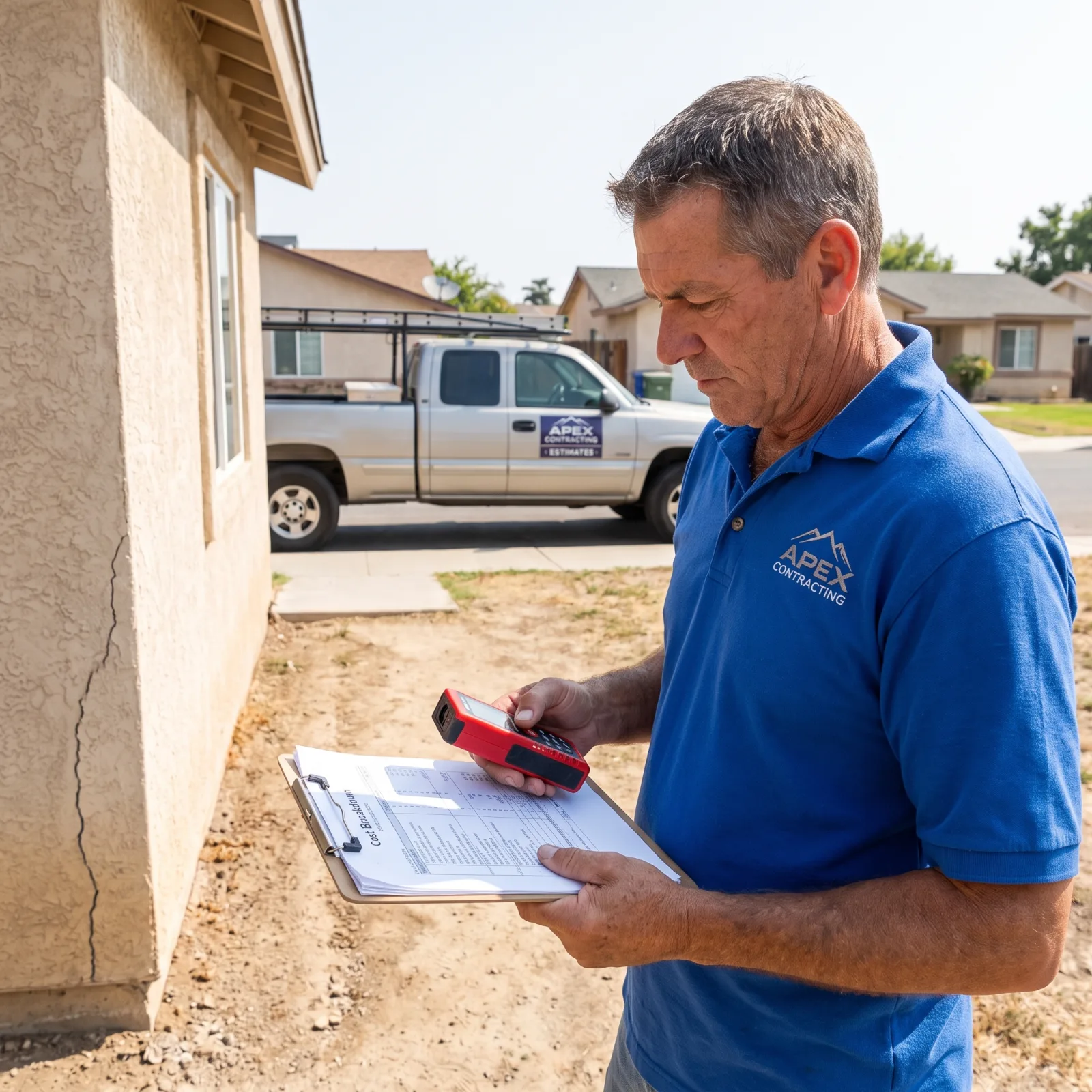
Underpinning is priced per pier, not per square foot, which is why two houses on the same street can get very different numbers. Below are planning ranges for pier pricing, typical project totals, and the permit and engineering costs that sit outside the contractor's pier line item. All figures are general market ranges for planning — only a site-specific bid is a real price.
How much does foundation underpinning cost per pier in San Diego?
Installed piers in San Diego County commonly run about $1,200 to $2,500 each for push piers and $1,500 to $3,000 each for helical piers. Depth, access, and soil conditions move a given project within that range, so treat per-pier figures as planning numbers only.
Three variables explain most of the spread. Depth is the biggest: a pier that finds competent bearing at twelve feet costs materially less than one driven past thirty feet of fill on a canyon lot, because both material and installation time scale with depth. Access is second — a pier location a crew can reach with equipment from the driveway is cheaper than one requiring hand-carried gear through a side yard, interior slab penetration, or work off a slope. Third is the pier system itself, since helical piers carry a higher unit price for the helix plates and torque-monitored installation, and are also the system more often specified where soils are weak. Be skeptical of any per-pier quote given before someone has established how deep the bearing layer actually is.
What does a typical San Diego underpinning project cost in total?
Most residential repairs are partial-perimeter rather than whole-house. A six to ten pier job commonly lands near $8,000 to $12,000 for the pier work itself, with full-perimeter or canyon-lot projects running substantially higher once depth and access are factored in.
The reason partial repairs are the norm is that settlement is usually differential — one corner, one wall line, or the fill side of a cut-fill transition is moving while the rest of the house is stable. Underpinning only the affected area is standard practice, and a competent engineer will tell you where the pier line should stop. Pier count is driven by spacing, which follows the foundation's ability to span between support points; heavier two-story wall lines need tighter spacing than a light single-story section. Where costs escalate sharply is deep fill, hillside access, and projects that turn out to need lateral stabilization in addition to vertical support. If a bid comes in far below the range above, check whether it includes engineering, permitting, and load testing, or only the piers.
Do I need a permit and an engineer for underpinning in San Diego?
Underpinning is structural work, so a building permit is generally required across San Diego County jurisdictions. Permit applications typically must include a repair plan and calculations stamped by a California-licensed civil or structural engineer before plan check will approve them.
This is the step homeowners most often try to skip and most often regret. The engineer's stamp is not a formality — it determines pier type, depth, spacing, and load capacity, and it is the document a future buyer's inspector will ask to see. Unpermitted structural repair surfaces during resale, and the remedy at that point is retroactive permitting, which means opening up completed work for inspection. Fee schedules vary by jurisdiction, so verify current permit and plan-check fees directly with the City of San Diego Development Services Department or your city or county building department rather than relying on a contractor's recollection. Also confirm who pulls the permit: it should be the licensed contractor, not you as an owner-builder, since owner-builder permits shift liability onto the homeowner.
What are the soft costs beyond the piers themselves?
Budget separately for the geotechnical investigation, the engineer's repair plan and stamp, municipal permit and plan-check fees, and post-repair cosmetic restoration. Together these soft costs commonly add several thousand dollars on top of the contractor's per-pier pricing, and they are billed by different parties.
Soft costs are where "the quote went up" stories come from, so put them in the budget from day one. A geotechnical report — borings or test pits plus lab work and recommendations — is the input the engineer needs and is billed by the geotechnical firm, not the contractor. Cosmetic restoration is the other commonly overlooked line: piers can often recover some elevation, but drywall, stucco, tile, and door and window adjustment are usually separate scopes after movement is arrested. Ask each bidder for a written breakdown separating pier work, engineering, permitting, and cosmetic repair. Comparing bids on the pier line alone is how two very different scopes end up looking like the same job.
San Diego foundation underpinning cost components and general planning ranges
Cost Component
General Planning Range
What Moves It
Push pier, installed
$1,200 – $2,500 each
Depth to bearing, access, structure weight
Helical pier, installed
$1,500 – $3,000 each
Helix configuration, torque requirement, depth
Typical partial-perimeter job (6–10 piers)
$8,000 – $12,000
Pier count and spacing set by the engineer
Geotechnical investigation
Varies by firm and scope
Number of borings, lab testing, slope complexity
Engineered plan & stamp
Varies by engineer
Site complexity, lateral vs. vertical scope
Permit & plan check
Per jurisdiction fee schedule
Verify directly with your building department
Ranges above are general market planning figures for San Diego County, not quotes. Actual pricing is set by the contractor after a site evaluation and engineered plan.