Foundation Underpinning Warning Signs Every San Diego Homeowner Should Know
Foundation underpinning warning signs rarely show up as a single dramatic crack — they show up as a pattern of small annoyances that a homeowner explains away one at a time until the pattern becomes impossible to ignore.
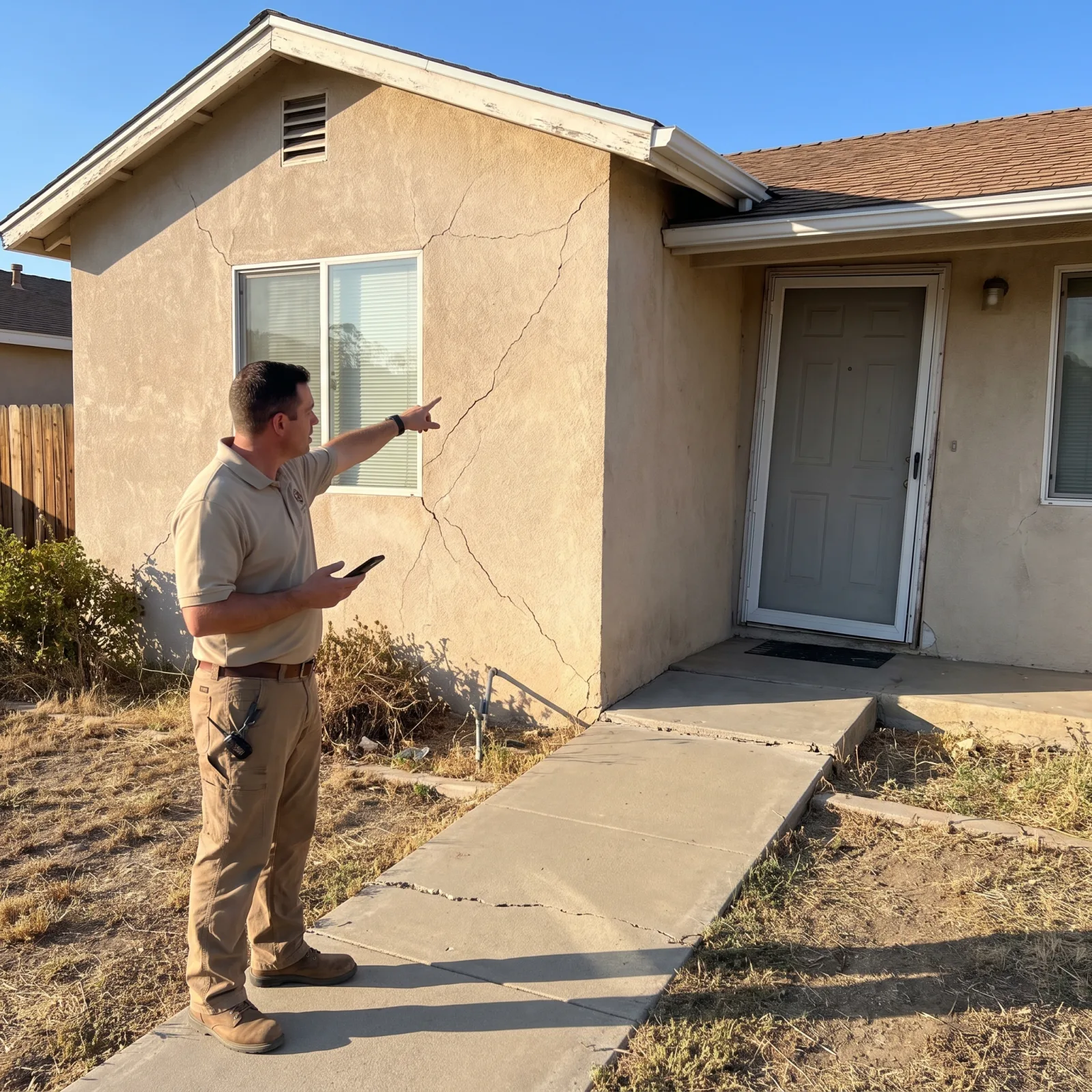
The Warning Signs That Point to Active Movement
A door that used to close fine and now needs a shoulder is not a hardware problem — it is a frame that has racked out of square because the foundation under one corner of the house has settled relative to the rest. Stair-step cracking in brick or stucco, running diagonally from a window or door corner, is the single most reliable visible sign of differential settlement, because it traces the exact stress path the structure is following as it torques. Gaps opening between interior trim and drywall, especially at ceiling corners, mean the same torque is reaching the upper floors. None of these signs, alone, prove the foundation needs underpinning — but two or more appearing in the same season, especially after a wet winter, is the combination worth an engineer's look before a contractor's.
Which Signs Are Cosmetic and Which Signs Are Structural
Hairline vertical cracks under a quarter-inch, especially ones that appeared once and have not widened in a year of watching, are usually shrinkage cracks from the original concrete cure and are not a foundation underpinning warning sign at all. What separates cosmetic from structural is movement over time, not the crack itself — a crack that has widened, a door that has gotten progressively harder to close over months, or a floor that has visibly sloped more this year than last are all evidence the foundation is still moving, which is the exact condition piering is built to stop. A one-time settlement event that has already stabilized is a mudjacking or cosmetic-repair candidate, not an underpinning candidate, and the distinction changes both the scope and the method a contractor should be pricing.
Why Canyon-Adjacent and Slope Lots See These Signs Earlier
San Diego's expansive clay soils and canyon-adjacent lots put houses through a wider swing between wet-season expansion and dry-season contraction than most inland markets, which is why foundation underpinning warning signs tend to appear years earlier here than in a stable-soil market. A slope lot adds a second failure mode on top of soil expansion — lateral creep, where the uphill side of a foundation is being pushed downhill by the soil mass above it, which produces a different crack pattern (horizontal, along a mortar joint) than straight differential settlement. Getting the failure mode right matters because a pier plan sized for vertical settlement does not necessarily arrest lateral slope movement, and the two are diagnosed differently before any contractor should be pricing a fix.
What To Do the Week You Notice the Signs
Photograph every crack with a coin or ruler in frame for scale and date the photo — that record is the single most useful thing a homeowner can hand an engineer, because it turns "has this gotten worse" from a guess into a measurement. Mark the end of any active crack with a pencil line and the date, and check it again in thirty days; a crack that has grown past the line is confirmed active movement. Get a structural engineer's opinion before a contractor's bid where possible — an engineer has no incentive to recommend a larger pier count than the house needs, which is not true of every contractor pricing the same job.
Related guides
Ready for a written number on your project?