The Helical Pier Installation Process, Step by Step
The helical pier installation process looks simple from the yard — a machine, a shaft, a bracket — but the sequence underneath that determines whether the pier actually holds is where most homeowner questions belong.
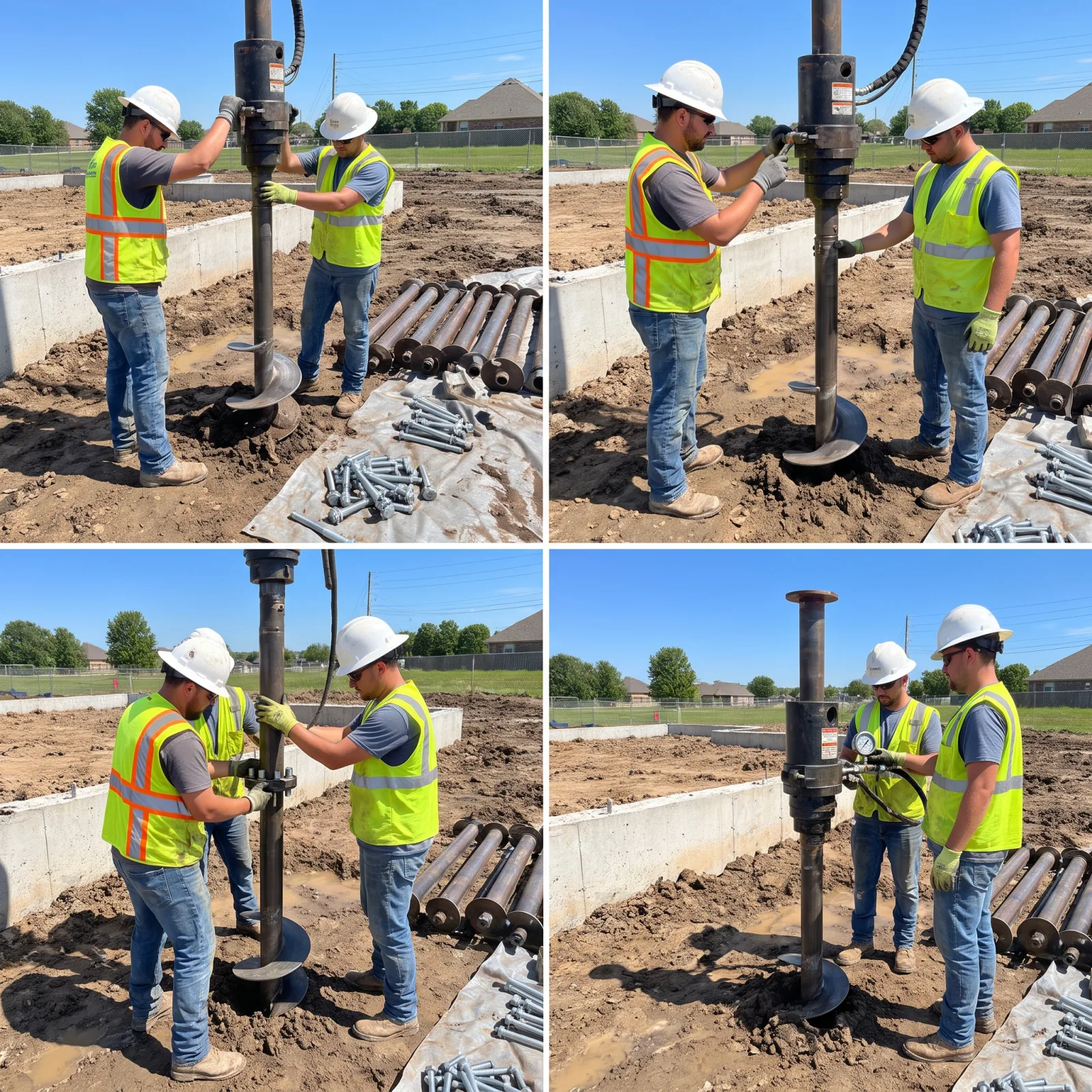
Site Access and Pre-Installation Excavation
Before any pier goes in, a crew excavates a small pit at each planned pier location down to the footing, exposing the area where a steel bracket will eventually clamp onto the foundation. Access is the first real variable in the helical pier installation process — a crawlspace or finished basement adds hand-digging and confined-space labor that an open yard install does not need, and that access difficulty is usually the biggest single driver of how long a job actually takes, more than the pier count itself. Underground utilities get located and marked before excavation starts; a missed gas or water line at this stage is the most common cause of an installation delay.
Torque-to-Depth: How the Pier Actually Gets Rated
A helical pier is a steel shaft with helical plates welded along its length, advanced into the soil with a hydraulic drive head that reads installation torque in real time. The pier keeps going deeper until the torque reading hits the target the engineer calculated for that house's load — not a fixed depth, because soil bearing capacity varies lot to lot and even pier to pier on the same lot. This torque-to-depth method is what makes helical piers verifiable at the moment of installation: the crew and the engineer both see the number the pier achieved, versus mudjacking or a fixed-depth push pier, where the load-bearing capacity is inferred rather than measured on-site.
Load Transfer and Bracket Installation
Once a pier reaches its target torque, a steel bracket is bolted to both the pier shaft and the existing foundation footing, and hydraulic jacks at each bracket lift the structure back toward level in small, coordinated increments across every pier location simultaneously — lifting one corner alone while the others hold still is how a new crack gets created instead of an old one closed. The weight of that section of the house is then permanently transferred from the failing soil onto the pier system, which is the actual mechanism that stops further settlement: the load simply no longer rests on the soil that was moving.
Backfill, Cleanup, and What Happens After
Excavated pits get backfilled and compacted, any disturbed landscaping or hardscape gets restored to the extent the original scope covered, and the visible above-grade portion of each bracket is typically the only sign a pier was installed at all once the yard is put back together. Most single-family helical pier jobs run a handful of days for the piering itself, longer if access is difficult or if the pier count is high, and interior cosmetic repair (drywall, trim, re-hanging doors that had racked) is a separate scope most contractors price after the structural work is confirmed stable, not before.
Ready for a written number on your project?