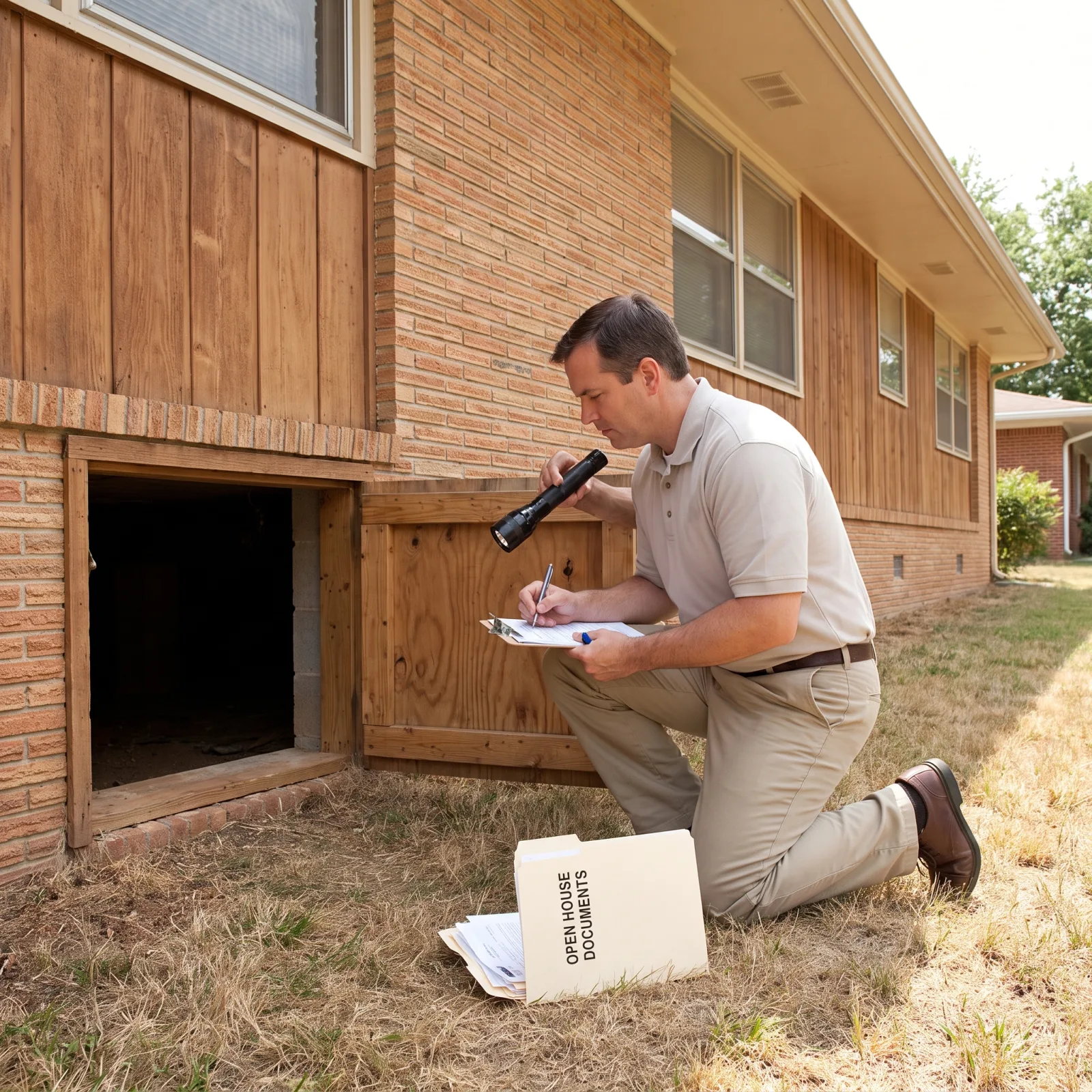
What a Foundation Inspection Actually Checks
A thorough foundation inspection checks crack width, direction, and pattern; door and window operation; floor level with a laser or manometer level; crawl space post, pier, and girder condition where accessible; visible moisture or termite damage; and, for canyon-adjacent lots, whether fill soil boundaries are visible in exposed grading.
Floor-level readings are the most objective data point an inspection produces — a laser level or water (manometer) level gives an elevation reading at multiple points, and the pattern of those readings (a single low corner versus a diagonal trend across the whole slab) tells an engineer more about the cause than any visual impression alone. On a raised foundation, the crawl space inspection is where most of the useful information lives: post condition, moisture staining, and pier pad cracking are usually invisible from inside the house. See our underpinning cost guide for what happens after an inspection identifies a repair scope.