San Diego Underpinning Get a Free Quote Get Matched Free

San Diego County, CA · Older Homes & Crawl Spaces

Raised Foundation Repair San Diego Homeowners Can Trust

Raised foundation repair in San Diego means fixing a post-and-pier or perimeter stem-wall foundation with a crawl space underneath — the standard construction method across North Park, South Park, Kensington, Talmadge, and other pre-1960s San Diego neighborhoods, before slab-on-grade became the norm. Because the crawl space gives a contractor direct access to the framing, raised foundation repair is a different job from slab underpinning, with its own costs, warning signs, and repair sequence.

Crawl space post and pier system beneath a raised foundation home being inspected for settlement

Raised Foundation vs. Slab: Why the Repair Method Is Different

A raised foundation lifts the house on posts and piers over a crawl space, giving direct access for repair. A slab foundation is poured on grade with nothing beneath it, so settlement there almost always requires exterior push or helical piers instead.

Because a raised foundation's structural elements — the mudsill, cripple walls, posts, girders, and piers — are all reachable from inside the crawl space, a contractor can often re-level the house by replacing a rotted post, resetting a shifted pier pad, or adding new piers under a sagging girder without exterior excavation. A slab has no such access; the foundation is the floor, so repair means going around the perimeter from outside with driven piers. This is also why a raised foundation shows different symptoms first — bouncy or spongy floors, gaps opening between the floor and baseboard — while a slab foundation more often shows up first as wall or stucco cracking.

Why San Diego Has So Many Raised Foundations

Post-and-pier and raised perimeter construction was the standard building method in San Diego from the 1920s through roughly the 1950s, before slab-on-grade construction became the dominant, cheaper production-home method in the postwar building boom.

That means whole neighborhoods — the older core communities inside the I-8/I-805 loop, plus coastal and canyon-adjacent tracts platted before mid-century — share the same foundation type and, often, the same age-related issues: undersized original piers by today's code, wood posts that have taken decades of moisture exposure, and cripple walls that predate modern seismic anchor-bolt and shear-panel requirements. A raised foundation built in 1935 was engineered for the loads and code of 1935, not for a 2026 remodel that added a second story or an open-concept great room.

Common Raised Foundation Repair Methods

The most common repairs are post and pier replacement, girder sistering or reinforcement, cripple wall replacement with seismic bracing, and helical pier installation where the existing footing can no longer be trusted to carry the load.

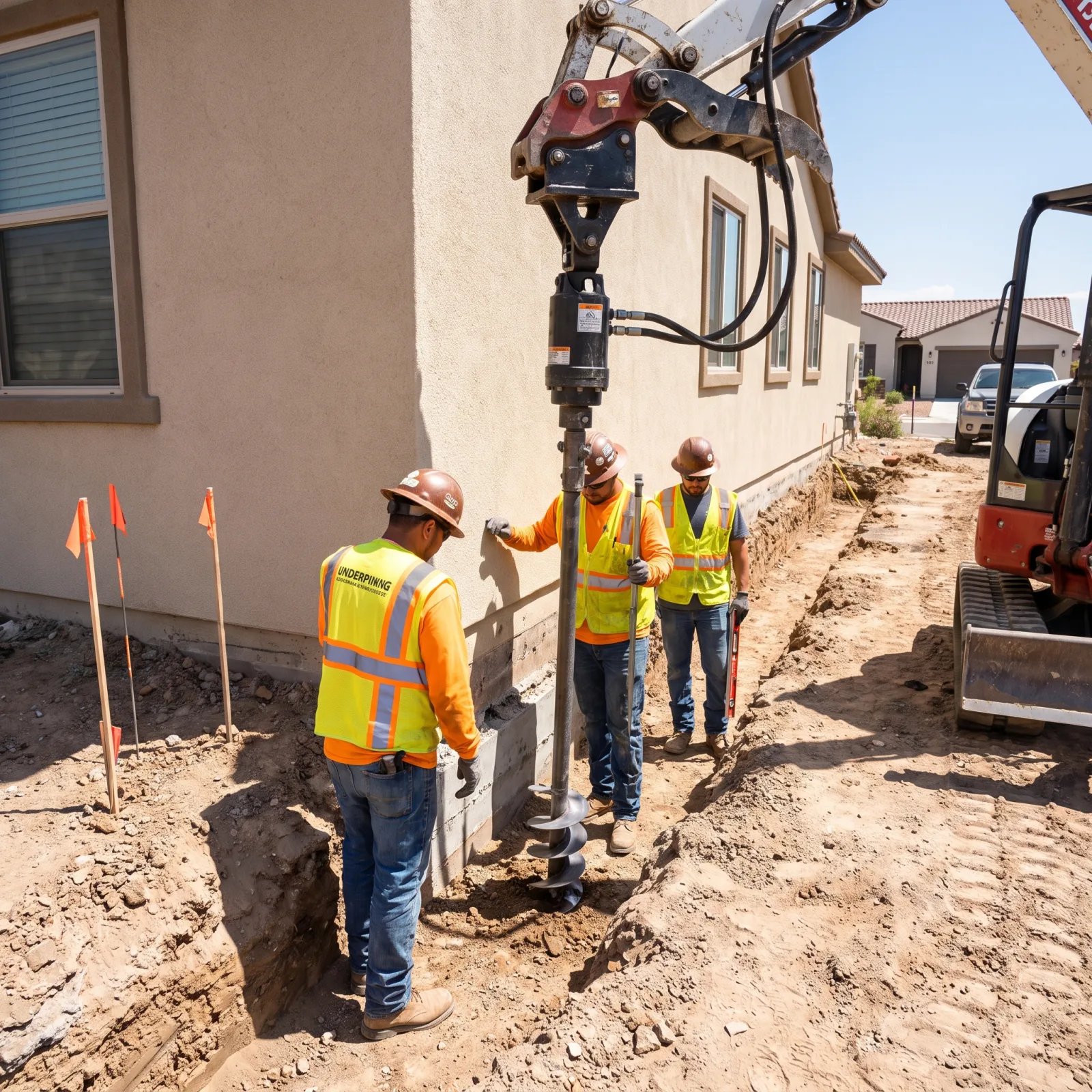
Post and pier replacement addresses isolated, localized settlement — a single sagging corner or a soft spot in the floor traced to one failed post. Girder sistering bolts a new beam alongside a cracked or undersized original girder to restore its carrying capacity without full replacement. Cripple wall replacement is the larger project: pulling and reframing the short stud wall between the foundation and the first floor, almost always paired with anchor bolting the mudsill to the foundation and adding plywood shear panels, since older cripple walls are a well-documented seismic weak point. Where the original pier footings themselves have settled or cracked, helical piers can be installed beneath the crawl space to underpin them directly — smaller-diameter, portable equipment makes this practical even in a tight crawl space.

What Raised Foundation Repair Costs

Isolated post and pier work commonly runs a few thousand dollars per repair area. Full cripple wall shoring or a seismic retrofit of an older raised foundation is a substantially larger project once framing, anchor bolts, and shear panels are added — see the general per-pier ranges on our full underpinning cost guide.

Crawl space access is the biggest cost driver that does not exist on a slab job: a tight 18-inch crawl space with ductwork and plumbing in the way takes longer and costs more per repair point than an open, walk-in space. Wood rot and termite damage are the second driver — a post that looks fine from the top can be hollow at grade level, and a contractor who finds that mid-job is not padding the bid, they are pricing what they actually found. Ask for a written scope that separates structural repair from any incidental plumbing or electrical relocation needed to reach the work.

Raised foundation vs. slab foundation repair comparison for San Diego homes
Factor Raised Foundation (Post & Pier) Slab Foundation
Repair access From inside the crawl space Exterior excavation only
Typical San Diego era 1920s–1950s neighborhoods 1950s–present tract homes
Common first symptom Bouncy or sloping floors Wall or stucco cracking
Repair method Post/pier/girder replacement, cripple wall shoring Perimeter push or helical piers

General planning information for San Diego County homes, not a quote. A site-specific crawl space inspection sets the actual scope.

Verify engineering and structural standards

Good to Know

Raised Foundation Repair — Frequently Asked Questions

What is a raised foundation, and why does San Diego have so many?+

A raised foundation (post-and-pier or perimeter stem wall with a crawl space) lifts the house's floor framing above grade on wood posts and concrete piers instead of pouring a slab directly on the ground. San Diego's older neighborhoods — North Park, South Park, Kensington, Talmadge, City Heights — were built this way from the 1920s through the 1950s, before slab-on-grade became the standard production-home method.

How is raised foundation repair different from slab foundation repair?+

A raised foundation's crawl space gives a contractor direct access to posts, piers, and girders without breaking concrete, so repair often means replacing rotted posts, re-leveling with shims or jacks, and adding piers under weak points. A slab foundation has no access beneath it, so settlement repair almost always means exterior push or helical piers driven around the slab's perimeter — a different method with different costs.

Can a raised foundation be repaired without leaving the house?+

Most raised foundation repair happens entirely in the crawl space and does not require vacating the house, since the work is beneath the floor rather than inside living space. Full-perimeter cripple wall replacement or extensive re-leveling can disrupt plumbing and electrical runs temporarily, so ask your contractor for a room-by-room disruption estimate before scheduling. See our guide on living in the house during foundation repair.

What does raised foundation repair cost in San Diego?+

Isolated post and pier replacement commonly runs a few thousand dollars, while full cripple wall shoring or seismic retrofit of an older raised foundation is a substantially larger project once framing, anchor bolts, and shear panels are added. Get a site-specific bid — crawl space access and the extent of wood rot or termite damage change the number more than anything else. Compare it against our underpinning cost breakdown.

Not sure which foundation type you have, or how serious the movement is? Get a free crawl space evaluation from a CSLB-licensed contractor.

Request a Free Contractor Match

Takes about 60 seconds.

Qualification

We match you with CSLB-licensed foundation contractors. By submitting, you consent to be contacted by phone, text, and email regarding your request. See our Privacy Policy.

Related guides